1) Executive summary
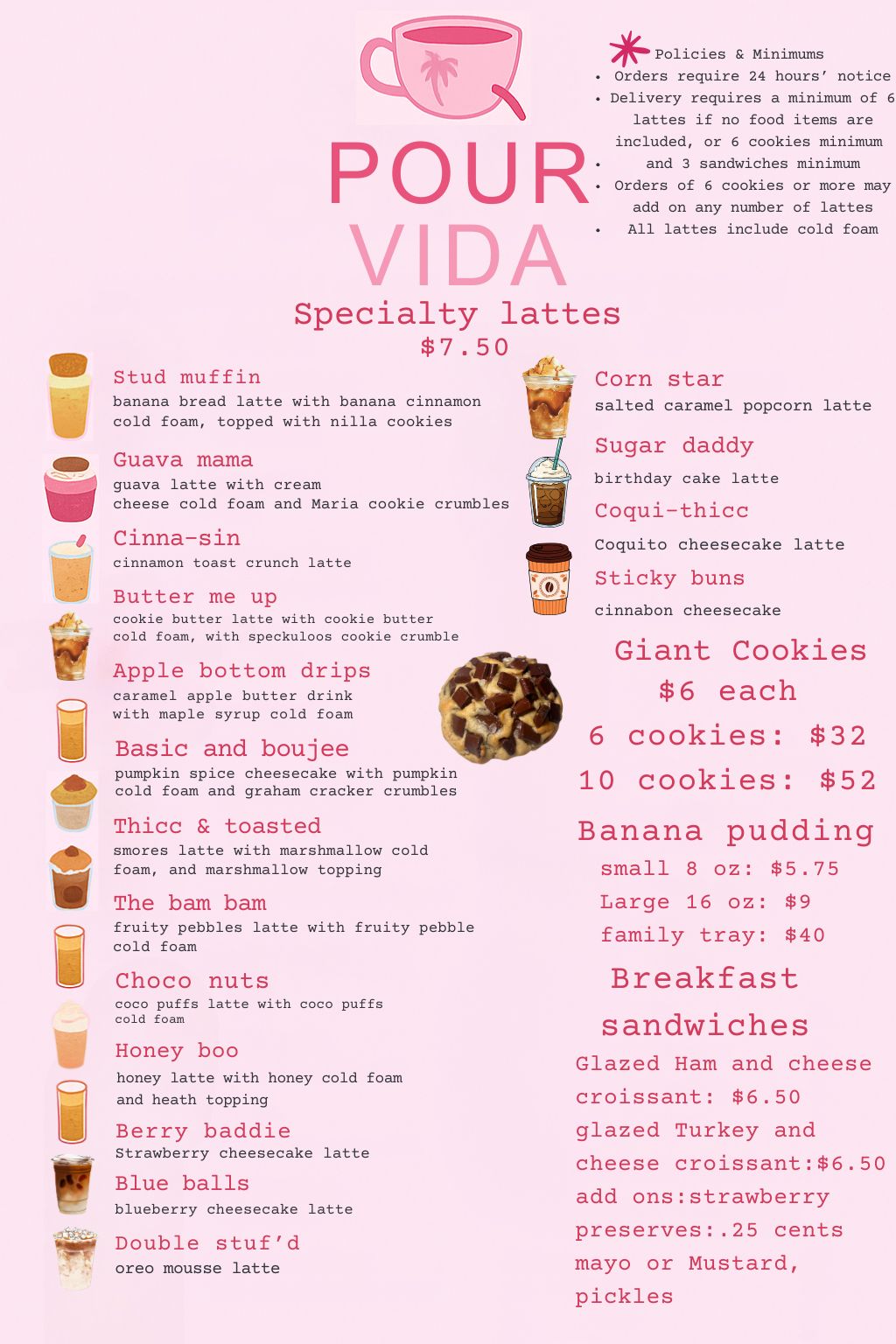
Brand and concept: Pour Vida is a specialty coffee concept offering espresso-based drinks, barista-crafted beverages, and a curated café experience. The Pour Vida name, logo, and recipes are licensed to franchisees under a defined brand standards program.
Franchise opportunity: A one-location franchise with a clear path to multi-unit expansion. The initial offering includes comprehensive training, operations manuals, supply chain access, and ongoing support to ensure brand consistency and quality.
Investment profile: Estimated total initial investment per location ranging from $300,000 to $1,178,500, including the one-time franchise fee of $35,000. Eligible franchisees must have at least $300,000 in liquid assets and a minimum net worth of $1 million.
Ongoing fees: Royalty of 7.5%–9% of gross sales, advertising/marketing fund at 3% of gross sales, and a technology/support fee of 0.5% of gross sales.
Geography and growth: Start with a single-location pilot, then pursue multi-unit development rights in targeted markets under a structured growth plan.
2) Franchise concept and brand identity
Brand, IP, and rights: Pour Vida provides licensed use of the brand name, logo, standardized recipes, and proprietary beverage programs. Franchisees must operate in compliance with brand guidelines and quality controls.
Store format and experience: Standardized store design, equipment specifications, and service model to ensure consistent quality and a premium guest experience.
Menu and offerings: Core coffee program plus select café fare; seasonal and limited-time items to drive repeat visits, all aligned with brand standards.
Franchise support: Training (initial and ongoing), operations manuals, store opening playbooks, supplier and equipment onboarding, marketing programs, loyalty and POS technology, and field support.
3) Market opportunity and competitive landscape
Market need: Growing demand for premium coffee experiences, convenient urban stops, and “connected” café spaces for remote work and social activity.
Target customer: Professionals, students, andlocal communities seeking high-quality coffee, quick-service throughput, and a welcoming environment.
Competitive landscape: Independent coffee shops, local coffee chains, and large national brands. Pour Vida differentiates on consistent quality, brand experience, and a strong loyalty-driven program.
Location strategy: High-foot-traffic nodes (lifestyle centers, business districts, university-adjacent areas, transit hubs) with potential for drive-through where feasible.
4) Franchise offering and structure
Franchise unit type: Single-unit franchise with option to convert to multiple-unit rights as demand grows.
Territory: Initial territory size defined by market opportunity, with potential expansion rights subject to performance and approval.
Term and renewal: Franchise term proposed at 10 years, with renewal options (e.g., two additional 5-year renewals) subject to performance and compliance.
Training and support: Comprehensive initial training program (operations, barista skills, safety, customer service, POS systems), plus ongoing quarterly training and field support.
Intellectual property and quality control: Brand guidelines, product specifications, supplier approvals, and periodic audits to ensure consistency and quality.
5) Investment and financing (per location)
Estimated total initial investment: $300,000 to $1,178,500 (includes one-time franchise fee).
Franchise fee: $35,000 (paid per location).
Real estate: Not included in the base estimates; real estate costs vary by location and will affect total capital needs.
Initial operating capital: Included within the range to cover first 2–3 months of operating expenses.
Liquid assets requirement: Minimum $300,000.
Net worth requirement: Minimum $1,000,000.
Ongoing fees:
Royalty: 7.5%–9% of gross sales.
Advertising/marketing fund: 3% of gross sales.*
Technology and systems/tech fee: 0.5% of gross sales.
Financing: Prospective franchisees may seek bank financing or other sources. The franchisor may provide assistance with financial modeling and referrals to lenders as part of the support program.
6) Unit economics and illustrative pro forma (illustrative; to be refined in the FDD)
Important note: This section provides a hypothetical illustration to help you model performance. Actual results will vary based on location, market conditions, management, seasonality, and other factors. The franchisor may choose to provide or not provide Item 19 financial performance representations; if provided, it should be based on actual store data or clearly stated benchmarks.
Assumptions (illustrative example for one store):
Average gross revenue per month: $90,000
COGS and labor as a percentage of sales: 60% combined (illustrative)
Other operating expenses (rent, utilities, insurance, etc.): 20–25% of gross
EBITDA margin target (illustrative): 10–15% after corporate and store-level costs
Illustrative monthly cash flow (before debt service and taxes):
Gross sales: $90,000
Royalty (8.5%): -$7,650
Advertising (3%): -$2,700
Tech fee (0.5%): -$450
Estimated store-level expenses (excluding depreciation and amortization): -$50,000
Estimated EBITDA: around $29,200 per month (illustrative)
Annualized outlook: EBITDA could be in the six-figure range for a well-located, well-managed store; this is an illustrative scenario only.
7) Franchisee qualifications and commitments
Personal qualifications: Entrepreneurial alignment with brand values, operating mindset focused on guest experience, and willingness to follow the proven system.
Financial qualifications: At least $300,000 in liquid assets and $1,000,000 net worth; access to working capital to cover initial operating expenses.
Legal and regulatory: Ability to sign and comply with the Franchise Agreement, applicable local licenses, health and safety compliance, and ongoing disclosure requirements.
Commitment: Active day-to-day involvement in store operations or oversight, with a capable manager in place when not onsite.
8) Franchisee training, operations, and support
Initial training: Comprehensive program covering operations, beverage preparation, customer service, merchandising, inventory management, and safety/compliance.
Operations manual: Detailed manuals covering every aspect of store operations, from opening/closing procedures to standard recipes and quality controls.
Technology: POS system, inventory management, loyalty program integration, and reporting tools; ongoing tech support and updates.
Marketing and grand openings: Local store marketing toolkit, national brand campaigns, social media guidance, and a grand opening plan.
9) Real estate and site development
Site selection: Criteria-based approach focusing on high foot traffic, visibility, accessibility, and parking.
Build-out standards: Brand-approved floor plan, fixtures, equipment packages, signage, and interior finishes.
Lease terms: Standard form leases aligned with brand standards, with negotiation support as needed.
Equipment: Coffee systems, grinders, brewers, water filtration, refrigeration, smallware, and back-office hardware/software.
Opening inventory: Initial stock of beans, pastries, beverages, and consumables necessary to start operations.
10) Operations and supplier network
Supply chain: Preferred supplier network for beans, beverages, dairy alternatives, pastries, and packaging; quality controls and periodic audits.
Menu changes: Process for introducing new items, seasonal offerings, price adjustments, and withdrawal of items.
Inventory management: Systems to track usage, waste, and reorder points; shrinkage controls.
Quality assurance: Routine product testing, barista skill checks, and customer feedback loops.
11) Brand, IP protection, and compliance
Intellectual property: Use of Pour Vida trademarks, logos, recipes, and brand assets is licensed and regulated under the Franchise Agreement and brand guidelines.
Quality control: Regular checks by the franchisor or a designated third party to ensure consistency with brand standards.
Confidentiality and non-compete: Agreements protecting trade secrets and preventing leakage of proprietary processes.
12) Territory, expansion, and multi-unit rights
Initial territory: Defined geographical area based on market assessment and agreed-upon parameters.
Expansion path: Clear criteria for adding additional units, including performance thresholds and approval processes.
Growth strategy: Plan for future multi-unit development in adjacent markets or within defined regions as part of an overall growth strategy.
13) Legal framework: contracts and protections
Franchise Agreement: Primary operating agreement detailing term, fees, obligations, and restrictions.
Ancillary agreements: Labor, supplier, and IT agreements as necessary to operate the store.
Dispute resolution: Mediation and arbitration processes, governing law, and venue provisions.
Transfer and assignment: Terms under which the franchise may be transferred or sold.
14) Financial performance representations (Item 19) or alternative
If Item 19 is not provided due to lack of historical data, include a clear statement: “Pour Vida has not yet established system-wide performance data for public disclosure. A representative unit economics model and pro forma are provided as illustrative tools to assist prospective franchisees in evaluating investment topology. Final Item 19 data will be provided if and when meaningful performance data is available from existing stores.”
If offering illustrative Item 19 data, present carefully with caveats, data sources, and methodology.
15) Risk factors and disclosures
Market risk: Economic downturns affecting discretionary spend.
Real estate risk: Location performance variability and lease-related risk.
Operational risk: Talent recruitment, training, and retention challenges.
Brand risk: Reputation management and adherence to brand standards.
Regulatory risk: Health, safety, and employment regulations that could impact operations and costs.
16) Compliance and disclosures
Franchise Disclosure Document (FDD) readiness: Compliance with applicable federal and state franchise laws; all necessary disclosures, exhibits, and attachments.
Public filings: Any required registrations or filings in the franchise markets where offered.
Privacy and data security: Compliance with data protection and consumer privacy laws for customer data and loyalty programs.
17) Insurance and risk management
Required coverage: General liability, property, workers’ compensation, and product liability as appropriate.
Additional coverage: Business interruption, crime, and cyber liability to protect digital systems and data.
18) Information technology and data
Systems: POS, loyalty program, inventory management, and reporting platforms.
Data governance: Data ownership, privacy, security measures, and access controls.
System updates: Regular software updates and support provisions.
19) Confidentiality, non-disclosure, and non-solicitation
Agreement to protect trade secrets, recipes, and brand assets.
Non-solicitation provisions related to staff and suppliers as appropriate.
Public disclosures and press handling guidelines.
20) Termination, post-termination rights, and wind-down
Grounds for termination: Breach of agreement, non-payment, failure to meet performance standards, or other defined defaults.
Post-termination obligations: Return of confidential information, decommissioning of branding assets, and cessation of use of the brand.
Wind-down process: Step-by-step guidance for closing or transferring the business.
21) Dispute resolution and governing law
Preferred mechanism: Mediation and/or arbitration, with a defined arbitration forum and rules.
Governing law: State or jurisdiction specified in the Franchise Agreement.
22) Books, records, and audits
Financial reporting: Required monthly and quarterly reporting, with audit rights for franchisor.
Tax and accounting: Consistency with Generally Accepted Accounting Principles (GAAP) or applicable standards.
23) Attachments and exhibits
Exhibit A: Franchise Agreement summary (highlights, not a substitute for the full agreement).
Exhibit B: Initial equipment and build-out package.
Exhibit C: Example site layout and design guidelines.
Exhibit D: Marketing fund guidelines and sample campaigns.
Exhibit E: Itemized initial investment worksheet.
Exhibit F: Pro forma assumptions and sample calculations.
Exhibit G: Glossary of terms.
Appendices (practical formats to include)
One-page franchise brief (high-level investment, support, and benefits).
Full draft of the Franchise Agreement (outline; to be prepared by a franchise attorney with jurisdiction-specific customization).
Addendums: Real estate, equipment, and supply chain agreements.
Preliminary territory map and expansion plan.
12–18 month launch plan with milestones (site selection, permitting, build-out, training, grand opening).